Executive Order Reclassifies Marijuana to Schedule III: Impact on Retailers
by Robert Garrison and Christopher DiBiase - December 26, 2025
Updated April 23, 2026
Key Takeaways
Update — April 23, 2026: Acting Attorney General Todd Blanche today signed an order formally completing the rescheduling directed by the December 2025 executive order. The order immediately moves state-licensed medical marijuana and FDA-approved marijuana products from Schedule I to Schedule III — ending IRS 280E for those covered operators. A new DEA administrative hearing beginning June 29, 2026 will address broader rescheduling of all marijuana, including recreational-use cannabis. Read the full update below.
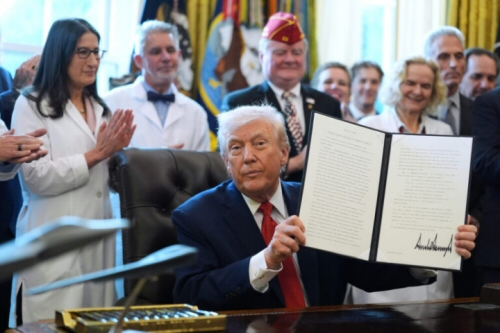 On December 18, 2025, the White House issued a landmark executive order directing the Department of Justice to move marijuana from Schedule I to Schedule III of the Controlled Substances Act — in the most expeditious manner possible. This move ends decades of federal policy that classified cannabis alongside heroin and LSD. Schedule III places it within the same category as Tylenol (with codeine), testosterone, ketamine, and certain steroids. By moving to Schedule III, the federal government acknowledges marijuana’s medical applications and its lower potential for abuse, aligning federal perception with the reality already established in 40 states with medical programs and 24 states with adult-use legalization.
For owners of CBD shops, smoke shops, and vape lounges, this reclassification is a signal that the "gray market" era is ending and a sophisticated, regulated industry is taking its place.
A Landmark Win for State’s Rights
This executive order is a profound validation of the 10th Amendment and the sovereignty of individual states. For years, states have acted as "laboratories of democracy," building their own cannabis and hemp frameworks while the federal government remained stagnant. This rescheduling acts as a peace treaty between federal agencies and state governments.
- Reduced Federal Interference: Lowering the schedule severity reduces the legal justification for federal intervention in states where marijuana is already legal.
- Validation of State Oversight: The shift acknowledges that state-level medical programs are based on legitimate science, strengthening the legal standing of state licenses.
- Standardization: While states maintain their right to regulate, Schedule III provides a clearer federal framework that will eventually lead to more uniform safety and testing standards nationwide.
The End of IRS 280E: Financial Relief for Retailers
The most immediate and "game-changing" impact of this order is the effective end of IRS Code 280E for applicable businesses. Under Schedule I and II, plant-touching businesses were prohibited from deducting ordinary business expenses from their taxes. This often resulted in effective tax rates of 70% or higher for plant-touching businesses.
With the move to Schedule III, retailers can finally deduct standard expenses like rent, payroll, marketing, and technology investments. This will result in an immediate influx of capital for small business owners, allowing them to reinvest in their infrastructure and scale their operations.
SunFire POS: Navigating the New Compliance Landscape
As the industry moves toward Schedule III, the need for professional, high-performance retail technology has never been greater. Sunfire POS provides the specialized business management tools required for businesses to thrive in this more rigorous regulatory environment.
1. Built-In Regulatory Compliance
Schedule III status may bring new oversight from the FDA and DEA regarding product labeling and claims. SunFire POS integrates with an AI-powered automated product level compliance engine from Qredible to ensure your inventory and sales transactions meet federal, state, and local compliance standards automatically.
2. Advanced Age Verification
Protecting your license is paramount. SunFire POS features robust age-gating and ID verification at the point of sale, ensuring that restricted products never fall into the hands of minors—a critical requirement as federal scrutiny remains high.
3. High-Risk Payment Processing
While rescheduling eases the "risk conversation" with banks, traditional credit card networks still have complex rules. Traditional credit card network transactions processed through SunFire's point-of-sale are trustworthy since the product and the consumer have already been vetted by its integrated compliance technology. SunFire also offers CBD-friendly and high-risk payment processing options that allow you to accept payments securely without the fear of account shutdowns due to compliance mishaps.
4. Multi-Location Management
As the tax relief from the end of 280E fuels expansion, SunFire’s cloud-based system allows owners to manage inventory, reports, and staff across multiple locations from a single, unified dashboard.
Ready to Update Your POS Tech?
The reclassification of marijuana will trigger a need for better POS technology to ensure your shop meets evolving compliance standards. Get in front of the changes by updating to business management technology that keeps you ahead and keeps your business safe.
Explore Sunfire POS SolutionsSummary
The transition of marijuana to Schedule III is a historic victory for State’s Rights and economic freedom. By removing the 280E tax barrier for applicable businesses, the federal government has cleared a path for retailers to achieve true profitability. However, increased legitimacy brings increased responsibility. To stay ahead of shifting federal and state requirements, retailers must leverage modern technology like Sunfire POS to manage compliance, protect their licenses, and optimize their newfound capital for long-term growth.
April 23, 2026 Update: The Rescheduling Is Now Official — With Important Scope Limits
Acting Attorney General Todd Blanche today signed the order that formally executes the December 2025 directive. The legal rescheduling is now in effect — but the scope is more targeted than the original executive order implied, and several important nuances apply to CBD shop, smoke shop, and vape shop operators.
Who Is Covered Right Now
The April 23 order covers two specific categories of marijuana:
- FDA-approved drug products containing marijuana (such as Epidiolex)
- Marijuana products regulated under a qualifying state medical marijuana license
State-licensed medical marijuana operators in all 40 states with medical programs now have federal Schedule III status and immediate 280E relief. The 280E deduction disallowance no longer applies to their operations.
Who Is Not Yet Fully Covered
Recreational marijuana in adult-use states remains Schedule I for now. Operators who hold recreational-only licenses — or whose revenue is primarily from adult-use sales — are in a less certain position until the June 29 DEA hearing process clarifies their status. The DOJ stated that recreational cannabis will be addressed through the formal hearing process that begins June 29, 2026, with a final rule potentially issued as early as July 2026.
Potential Retroactive 280E Relief
In a significant development tucked into the Blanche order, the Acting Attorney General formally encourages the Secretary of the Treasury to consider providing retroactive 280E relief for prior tax years in which state-licensed medical operators were compliant with their state program. This does not guarantee refunds — it is a formal encouragement to Treasury to take that action separately. State-licensed medical operators should consult with their tax counsel about the implications for prior returns.
New DEA Registration Requirement
State-licensed medical marijuana operators are now required to register with the DEA under an expedited pathway that leverages existing state license infrastructure. This is a new federal compliance obligation that did not exist before April 23, 2026.
Legal Challenges Are Coming
Anti-legalization organization Smart Approaches to Marijuana (SAM) announced it will take immediate legal action to block the order. While the administration has structured the rescheduling to maximize legal defensibility — using a specific treaty-compliance legal authority to bypass the stalled Biden-era DEA rulemaking process — court challenges could affect the implementation timeline.
What This Means for Your Operations
For state-licensed medical operators: the 280E burden is lifted now, DEA registration is required, and compliance complexity is increasing, not decreasing. For adult-use operators: watch the June 29 hearing closely. For all operators: the automated compliance infrastructure you invest in today — Qredible, AgeChecker.net, stable payment processing through Metro Payment Technologies — becomes more essential as the regulatory framework formalizes, not less.
Resources
- Debusmann, B. (2025, December 18). Trump expands access to cannabis in a major shift in drug policy. BBC News. https://www.bbc.com/news/articles/cp8z684r6vlo
- Karnowski, S., & Johnson, G. (2025, November 28). What to know about the looming federal ban on THC-infused drinks and snacks. PBS. https://www.pbs.org/newshour/politics/what-to-know-about-the-looming-federal-ban-on-thc-infused-drinks-and-snacks
- Trump takes executive action to federally reschedule marijuana. NORML. (2025, December 18). https://norml.org/blog/2025/12/18/president-trump-takes-executive-action-to-federally-reschedule-marijuana/
- The United States Government. (2025, December 18). Increasing medical marijuana and Cannabidiol Research. The White House. https://www.whitehouse.gov/presidential-actions/2025/12/increasing-medical-marijuana-and-cannabidiol-research/
- Internal Revenue Service. (n.d.). Section 280E and Cannabis. IRS.gov.
- Cannabis Business Times. (2026, April 23). Trump DOJ Moves to Reschedule Cannabis, Orders New Expedited Hearing. https://www.cannabisbusinesstimes.com/cannabis-rescheduling/news/15823023/trump-doj-moves-to-reschedule-cannabis-orders-new-expedited-hearing
- NORML. (2026, April 23). Justice Department Moves to Federally Reschedule State-Approved Medical Cannabis Products. https://norml.org/blog/2026/04/23/justice-department-moves-to-federally-reschedule-state-approved-medical-cannabis-products/